| “내란이 초범이라 선처인가” 헌정질서 짓밟은 12·3 판결, 사법부는 누구를 향해 서 있는가. ai호남뉴스 박충배 편집/칼럼/논설 aihnnewsr@kakao.com |
| 2026년 02월 20일(금) 14:49 |
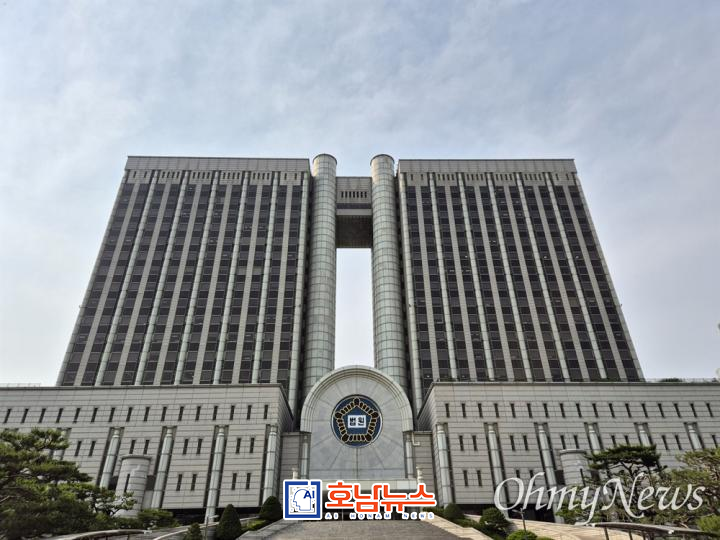 서울고등법원, 서울중앙법원 전경 / 사진제공=호남뉴스 |
【사설】
법원이 12·3 비상계엄 사태의 우두머리로 기소된 윤석열에게 무기징역을 선고했다.
김용현에게는 징역 30년, 노상원에게는 징역 18년이 내려졌다.
2024년 12월 3일 비상계엄 선포 이후 443일, 기소 389일 만의 1심 판단이다.
형량만 놓고 보면 중형이다.
그러나 판결문에 담긴 논리는 결코 가볍지 않다.
국가의 근간을 뒤흔든 내란을 인정하면서도, 초범이라는 이유를 고려해 선처의 여지를 남긴 판단. 범행이 대부분 실패로 돌아갔고, 현장에서 실탄 지급이나 직접적인 물리력 행사를 최대한 자제시키려 했다는 점을 참작했다는 대목은 상식의 문턱을 넘는다.
내란이 ‘초범’일 수 있는 범죄인가.
헌정사상 초유의 친위 쿠데타가 단 한 번이었다고 해서 감경의 사유가 되는가.
■ 실패한 내란이 가벼운 내란인가
이번 판결은 “야당이 다수인 국회가 탄핵과 예산 삭감으로 정부 기능을 무력화했다는 자력 판단 아래, 헌법기관을 무력으로 제압하려 했다”는 점을 내란으로 인정했다.
그렇다면 이미 답은 분명하다.
민주공화국에서 입법부를 무력으로 제압하려는 결심 자체가 헌정질서 파괴다.
그런데도 법원은 현장에서 물리력 행사를 자제했다는 점을 유리하게 보았다.
그러나 우리는 묻지 않을 수 없다.
계엄이 실패로 돌아간 이유가 누구의 절제 덕분이었는가.
국회 앞에 신발을 벗은 채로 모여든 시민들, 군인과 경찰 앞에서 방위벽을 세운 국민들, 헌정 질서를 몸으로 지킨 시민적 저항이 아니었던가.
실패한 쿠데타를 실행자의 공으로 돌리는 듯 한 논리는 민주주의에 대한 모욕이다.
■ 광주·전남이 느끼는 또 하나의 균열
광주와 전남에는 아직도 5·18의 상처가 살아 있다.
5·18 광주민주화운동은 단지 역사 교과서의 한 페이지가 아니다.
계엄군의 총구가 시민을 향했던 기억, 국가 권력이 헌법을 유린했던 경험은 세대를 넘어 이어지는 집단적 트라우마다.
그 땅에서 다시 ‘비상계엄’이 선포되고, 무력을 동원해 국회와 선관위를 제압하려 했다는 사실만으로도 상처는 되살아난다.
그런데도 사과 한마디 없는 내란 책임자에게 ‘초범’이라는 이유를 덧붙이는 판결은, 피해 기억을 가진 지역민들에게 또 다른 균열로 남는다.
■ 스모킹건은 왜 스모그가 되었는가.
특검은 노상원의 수첩을 ‘내란 시나리오’의 핵심 증거로 제시했다.
야당 인사에 대한 보복·제거 계획, 장기 집권 구상, 북한과의 긴장 조성 시나리오 등이 적혀 있었다는 주장이 제기됐다.
그러나 법원은 작성 시기를 특정할 수 없고 필기 형태가 조약하다는 이유로 이를 결정적 증거로 보지 않았다.
1년 전부터 치밀하게 준비됐다는 정황은 “증거 부족”으로 배척됐다.
내란은 우발적 분노가 아니라 계획범죄다.
계획의 흔적을 좇는 데서 법의 엄정함이 드러나야 한다.
그런데 정황은 의심으로, 의심은 배척으로 귀결됐다.
■ ‘적법성 신뢰’는 누구의 것인가
군과 경찰은 상관의 명령을 따른다.
그러나 그 명령이 헌법을 파괴하는 내용이라면, 적법성에 대한 신뢰는 근본부터 흔들린다.
이번 사태는 단지 개인의 일탈이 아니다.
국가 권력의 정점에서 내려온 잘못된 지시가 공권력 전체의 법적 정당성을 시험대에 올렸다.
이러한 구조적 위기를 단순히 “범죄 전력이 없다”는 이유로 감경한다면, 향후 어떤 권력자에게 경고가 되겠는가.
내란은 한 번이면 충분하다.
두 번째 기회는 국가에 없다.
■ 사법부 개혁, 더 이상 미룰 수 없다
사법부는 법과 양심에 따라 판단했다고 말할 것이다.
그러나 법 해석의 방향이 헌정 질서 수호보다 권력자에 대한 관용으로 읽힌다면, 국민 신뢰는 무너진다.
내란을 인정하고도, 그 중대성을 끝까지 밀어붙이지 못한 판결.
실패를 참작하고 초범을 고려하며 계획성을 축소한 판단.
이 모든 것은 단순한 양형 문제가 아니다.
대한민국 사법체계가 권력형 범죄 앞에서 얼마나 단단한가를 묻는 시험이었다.
헌법은 종이가 아니다.
계엄은 장난이 아니다.
내란은 초범일 수 없다.
이번 판결은 형량의 숫자를 넘어, 사법부가 스스로에게 던져야 할 질문을 남겼다.
권력 앞에서 법은 충분히 엄정했는가.
그 답을 내리지 못한다면, 사법 개혁은 선택이 아니라 필연이다.
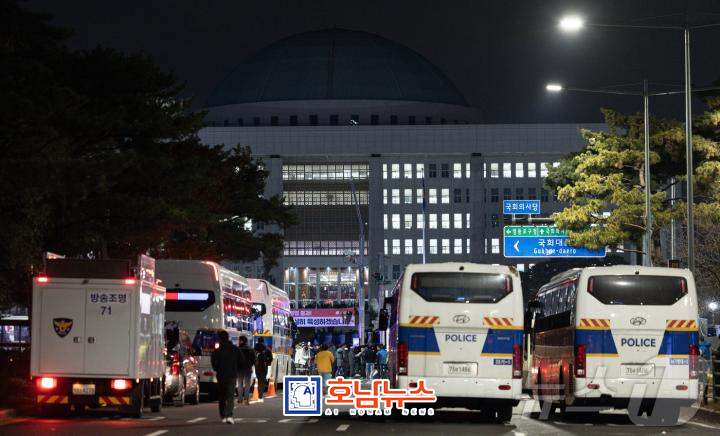 12.3 계엄 당시 국회에 배치된 경찰병력 / 사진제공 |
[Jeonnam = AI Honam News] aihnnews@kakao.com
“Is Treason Lenient Because It Is a First Offense?”
A December 3 Ruling That Trampled the Constitutional Order — Whom Does the Judiciary Stand For?
【Editorial】
The court sentenced Yoon Suk-yeol, indicted as the ringleader of the December 3 martial law insurrection, to life imprisonment.
Kim Yong-hyun received 30 years in prison, and Noh Sang-won was sentenced to 18 years.
The ruling came 443 days after the declaration of martial law on December 3, 2024, and 389 days after indictment.
In terms of length, the sentences are severe.
Yet the reasoning contained in the judgment is anything but weighty.
While acknowledging that the defendants committed insurrection that shook the foundations of the state, the court left room for leniency on the grounds that this was a first offense. It also took into account that much of the plot ultimately failed and that the distribution of live ammunition and direct physical force were, according to the ruling, restrained at the scene. Such reasoning stretches the limits of common sense.
Can insurrection ever be considered a “first offense”?
Can an unprecedented self-coup in constitutional history be mitigated simply because it happened only once?
■ Is a Failed Insurrection a Lesser Insurrection?
The ruling recognized that the defendants, acting on their own judgment that an opposition-controlled National Assembly had paralyzed government functions through impeachment attempts and budget cuts, resolved to use force to subdue constitutional institutions.
If that is so, the answer is already clear.
In a democratic republic, the very decision to subdue the legislature by force constitutes a destruction of constitutional order.
Yet the court viewed the restraint of physical force at the scene as a mitigating factor. We must ask:
Who was truly responsible for the failure of martial law?
Was it not the citizens who gathered barefoot before the National Assembly?
Was it not the people who formed human barricades against soldiers and police, defending constitutional order with their own bodies?
To treat a failed coup as evidence of the perpetrators’ restraint is an affront to democracy.
■ Another Fracture Felt by Gwangju and Jeonnam
In Gwangju and across Jeonnam, the wounds of the May 18 Democratic Uprising remain alive.
The May 18 Gwangju Democratic Uprising is not merely a page in a history textbook.
The memory of martial law troops turning their guns on civilians, of state power trampling the Constitution, persists as collective trauma passed down through generations.
To see “martial law” declared once again on that same land, with an attempt to subdue the National Assembly and the National Election Commission by force, is enough to reopen those scars.
And yet, attaching the word “first offense” to an insurrectionist who has not uttered a single word of apology leaves yet another fracture in a region that still carries the memory of state violence.
■ Why Did the “Smoking Gun” Become Smoke?
The special counsel presented Noh Sang-won’s notebook as key evidence of an insurrection scenario.
It allegedly contained plans for retaliation against opposition figures, long-term power consolidation, the orchestration of tensions with North Korea, and detailed martial law scenarios.
However, the court declined to treat it as decisive evidence, citing the inability to determine the date of writing and the fragmentary nature of the handwriting.
Allegations of meticulous planning over the course of a year were dismissed as lacking sufficient proof.
Insurrection is not an impulsive outburst; it is a crime of planning.
The rigor of the law should be revealed in tracing the footprints of preparation.
Instead, circumstances were reduced to suspicion, and suspicion to dismissal.
■ Whose “Trust in Legality”?
Soldiers and police follow the orders of their superiors.
But if those orders aim to destroy the Constitution, trust in their legality collapses at its foundation.
This was not merely an individual deviation.
It was a crisis in which directives issued from the very apex of state power placed the legitimacy of the entire public authority on trial.
If such a structural crisis is mitigated simply because there is no prior criminal record, what warning does that send to future holders of power?
One insurrection is one too many.
The state does not get a second chance.
■ Judicial Reform Can No Longer Be Deferred
The judiciary will say it ruled according to law and conscience.
But if the direction of legal interpretation appears more lenient toward power than steadfast in defense of constitutional order, public trust erodes.
A ruling that recognizes insurrection yet stops short of fully confronting its gravity;
A judgment that mitigates on the basis of failure, first-offense status, and diminished recognition of planning—
This is not merely a matter of sentencing.
It was a test of how firm the Republic of Korea’s judicial system stands before crimes of power.
The Constitution is not paper.
Martial law is not a toy.
Insurrection cannot be a “first offense.”
This ruling leaves behind a question that the judiciary must now answer for itself:
Was the law sufficiently stern before power?
If it cannot answer that question, judicial reform will not be a choice. It will be inevitable.
 ai호남뉴스 박충배 편집/칼럼/논설 aihnnewsr@kakao.com