2026.04.26 (일) 01:59



 닫기
닫기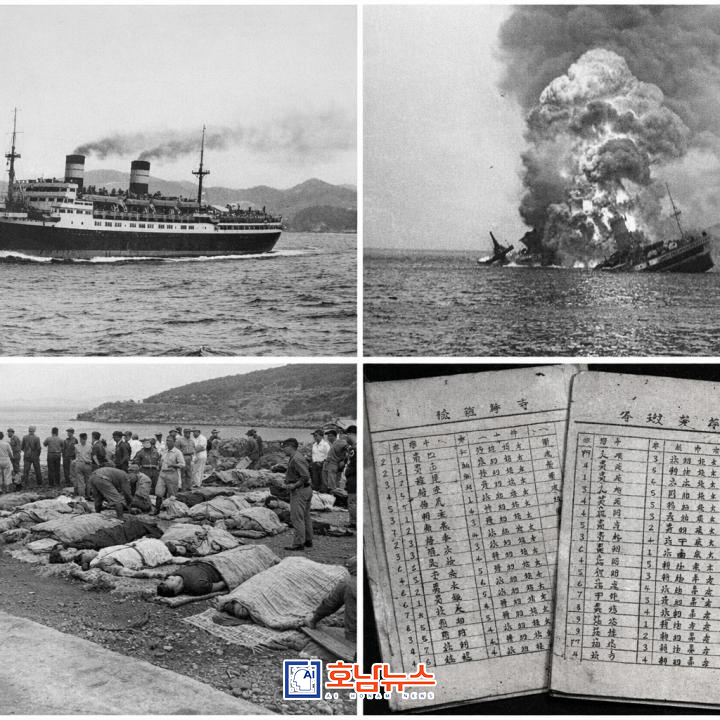 우키시마 마루 사건 사진 모음 / 사진제공=해남뉴스 |
박충배 편집/칼럼/논설
1945년 8월 22일, 일본 마이즈루 앞바다에서 침몰한 우키시마호.
이 사건은 오랫동안 ‘전후 혼란 속 해상 사고’로 불려 왔다.
그러나 그 배에 전남 출신 592명이 타고 있었다는 사실 앞에서, 우리는 더 이상 이 사건을 남의 역사로 넘길 수 없다.
우키시마호는 전남의 비극이자, 아직 끝나지 않은 현재의 문제다.
최근 행정안전부가 일본 정부로부터 제공받은 승선자 명부 75건(1·2차 명부와 2025년 제공된 3차 자료)을 종합 분석한 결과는 충격적이다.
우키시마호의 총 승선자는 3,542명, 이 가운데 528명이 폭발 사고로 사망했다.
그중 전남 출신이 592명으로, 단일 지역 기준으로 결코 적지 않은 숫자다.
이들은 ‘귀환자’가 아니었다.
전남의 농촌과 어촌에서 살다 일본의 군수공장과 산업현장으로 강제로 끌려간 사람들이었다.
해방을 맞았지만 자유롭게 귀향하지 못했고, 일본 정부가 관리하던 한 선박에 집단 수송됐다.
우키시마호는 ‘해방선’이 아니라 강제동원의 마지막 집결지였다.
의문은 침몰의 방식과 시점에서 더욱 짙어진다.
우키시마호는 일본 해군이 관리하던 선박이었고, 침몰 시점은 일본 패전 직후, 연합국에 의해 강제동원 실태가 본격적으로 조사되기 직전이었다.
이 배에는 전남 출신 노동자들을 포함해, 일본의 불법 동원 정책을 증언할 수 있는 살아 있는 증거들이 함께 타고 있었다.
이런 상황에서 발생한 선체 내부 폭발, 그리고 조선인 승선자 중심의 대규모 사망은 단순한 해상 사고로 보기 어렵다.
일본 정부는 지금까지 ‘기뢰 접촉’을 주장해 왔지만, 내부 폭발에 가까운 손상 양상, 일본인 승무원의 높은 생존율, 일부 관계자의 사전 이탈 정황, 사고 이후 구조와 명부 공개의 지연은 모두 합리적 의문을 낳는다.
특히 문제는 사고 이후다.
승선자 명부는 장기간 공개되지 않았고, 유족들은 수십 년간 아버지와 형제의 행방조차 확인하지 못했다.
전남 곳곳의 마을에서 “일본에 갔다가 돌아오지 못한 사람”으로만 기억된 이들이, 이제야 이름과 숫자로 드러나고 있다.
이것을 단순한 행정 미비로 넘길 수 있겠는가.
우키시마호와 함께 바다에 가라앉은 것은 사람만이 아니었다.
전남 청년들의 삶, 가족의 역사, 그리고 국가 책임을 입증할 증거들이 함께 가라앉았다.
만약 이 배가 무사히 귀환했다면, 일본 정부는 전남 출신 노동자들의 집단 증언을 포함해 강제동원의 실체를 국제사회 앞에서 직면해야 했을 것이다.
그 부담을 고려할 때, 조직적 폭파 가능성은 결코 터무니없는 주장이 아니다.
우키시마호 사건을 ‘해방 직후의 혼란’으로만 설명하는 것은 전남의 이름을 지우는 일이다.
이 사건은 우연이 아니라 구조였고, 사고가 아니라 식민지 국가폭력의 종결 장면이었다.
그리고 그 희생자 중 592명이 전남 사람이었다.
이제 전남이 묻지 않을 수 없다.
우키시마호는 왜 침몰했는가.
왜 전남의 청년들은 돌아오지 못했는가.
그리고 왜 지금까지 진실은 제대로 말해지지 않았는가.
우키시마호는 여전히 바다 속에 있지만, 전남의 기억까지 가라앉힐 수는 없다.
이 사건은 재조사돼야 하며, 국제적 검증이 필요하고, 일본 정부의 책임 있는 설명과 사과가 반드시 뒤따라야 한다.
아울러 전남도와 각 시·군은 희생자 조사, 기록화, 추모 사업에 더 적극적으로 나서야 한다.
우키시마호는 사고가 아니다.
그것은 전남의 이름 592명을 함께 지우려 했던 역사일 가능성이다.
이제 그 이름들을 다시 불러야 할 시간이다.
[Jeonnam = Haenam News]
haenamnews@kakao.com
Park Chung-bae
Editor / Columnist / Editorial Writer
A Distant Page of History Revisited as 2025 Comes to an End
The Sinking of the Ukishima Maru:
592 Names from Jeonnam Went Down with the Sea
— Not an Accident, but State Violence That Must Be Remembered —
On August 22, 1945, the Ukishima Maru sank in the waters off Maizuru, Japan.
For decades, this incident has been described as a “maritime accident amid the chaos following the war.”
However, in the face of the fact that 592 of those on board were from Jeonnam Province, this tragedy can no longer be dismissed as someone else’s history.
The Ukishima Maru is a tragedy of Jeonnam—and an unresolved issue that remains with us today.
Recent comprehensive analysis by South Korea’s Ministry of the Interior and Safety, based on 75 passenger manifests provided by the Japanese government (first and second lists, and a third set of materials submitted in 2025), has revealed shocking facts.
The Ukishima Maru carried 3,542 passengers in total, of whom 528 died in a massive explosion.
Among them, 592 were from Jeonnam Province, a figure far too large to be overlooked at the regional level.
These individuals were not “returnees.”
They were men taken from Jeonnam’s farming and fishing villages, forcibly mobilized to work in Japanese munitions factories and industrial sites.
Though liberation had come, they were not free to return home. Instead, they were collectively loaded onto a vessel managed by the Japanese government.
The Ukishima Maru was not a “repatriation ship,” but the final assembly point of forced mobilization.
The doubts deepen when examining the method and timing of the sinking.
The Ukishima Maru was under the control of the Japanese Navy, and it sank immediately after Japan’s surrender—just before the Allied Powers began full-scale investigations into forced labor practices.
On board were not only Jeonnam laborers seeeking to return home, but living evidence capable of testifying to Japan’s illegal mobilization policies.
Under these circumstances, a massive internal explosion followed by large-scale deaths—primarily among Korean passengers—cannot be easily explained as a simple maritime accident.
The Japanese government has long claimed the ship struck a naval mine, yet this explanation raises serious questions: damage resembling an internal explosion, the high survival rate of Japanese crew members, indications of prior evacuation by certain officials, and delays or concealment in rescue efforts and the release of passenger lists.
What is particularly troubling is what followed the sinking.
Passenger manifests were not disclosed for decades, and families spent generations unable even to confirm the fate of fathers and brothers.
Across Jeonnam’s villages, these victims were remembered only as “those who went to Japan and never returned.”
Only now are their names and numbers finally emerging.
Can this truly be dismissed as mere administrative failure?
What sank with the Ukishima Maru was not only human lives.
The lives of Jeonnam’s young men, the histories of their families, and the evidence capable of establishing state responsibility were all submerged together.
Had the ship safely returned, the Japanese government would have faced collective testimony from Jeonnam laborers—along with others—exposing the reality of forced mobilization before the international community in the immediate aftermath of the war.
Considering this burden, the possibility of an intentional explosion cannot be dismissed as an absurd claim.
To explain the Ukishima Maru incident merely as “post-liberation confusion” is to erase the names of Jeonnam.
This was not coincidence but structure; not an accident but the final scene of colonial state violence.
And among its victims were 592 people from Jeonnam.
Jeonnam must now ask:
Why did the Ukishima Maru sink?
Why did Jeonnam’s young men never return home?
And why has the truth remained unspoken for so long?
The Ukishima Maru still lies beneath the sea, but Jeonnam’s memory must not sink with it.
This case demands renewed investigation, international verification, and a responsible explanation and apology from the Japanese government.
At the same time, Jeonnam Province and its cities and counties must take more active roles in investigating victims, preserving records, and establishing memorial and commemoration projects.
The Ukishima Maru was not an accident.
It may have been an attempt to erase 592 names from Jeonnam along with the evidence itself.
Now is the time to call those names back into history.
 ai호남뉴스 박충배 편집/칼럼/논설 aihnnewsr@kakao.com