2026.04.24 (금) 20:00




 닫기
닫기 |
【사설】
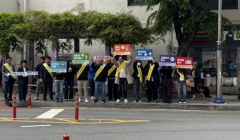
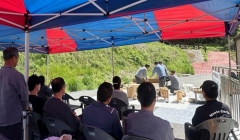
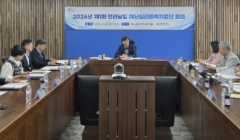
광주광역시와 전라남도가 19일부터 이달 말까지 27개 시군구를 순회하며 행정통합 공청회에 나선다.
광주시는 19일 오후 4시 30분 동구에서, 전남도는 같은 날 오전 10시 영암군에서 첫 공청회를 시작한다.
이번 일정에는 김영록 전남도지사를 비롯해 이정선, 김대중, 기초자치단체장과 지방의회 의원들이 대거 참석해 행정통합의 필요성과 추진 방향, 통합 이후의 청사진을 설명하겠다는 계획이다.
형식만 보면 대규모 의견 수렴의 장이다.
그러나 지금 시·도민이 이 공청회를 바라보는 시선은 단순한 설명회가 되지 않기를 바라는 절박함에 가깝다.
행정통합의 명분보다 더 근본적인 질문이 남아 있기 때문이다. 이 통합이 과연 인구 감소 지역의 삶을 지키는 선택인가, 아니면 도시로의 집중을 제도화하는 결정인가라는 물음이다.
행정통합이 가져올 가장 현실적인 위험은 이미 예견돼 있다.
행정이 하나로 묶이면 의료·교육·문화·행정 서비스는 접근성과 효율을 이유로 도시로 집중된다.
그 결과 군 단위 지역과 농어촌은 주소지만 남고 생활은 빠져나가는 구조에 놓이게 된다.
이는 가정이 아니라 이미 수도권 집중이 반복해서 증명한 결과이며, 광역 통합이 실패로 귀결된 수많은 사례가 보여준 결말이다.
그럼에도 현재 제시되는 통합 논리는 ‘광역 경쟁력’, ‘행정 효율성’, ‘국가 대응력’이라는 추상적 언어에 머물러 있다.
통합 이후 인구 감소 지역의 생활권을 어떻게 유지하고, 공공 서비스 접근성을 어떻게 보장할 것인지에 대한 구조적 설계는 아직 명확히 드러나지 않았다.
이 공백이 해소되지 않는다면 행정통합은 발전 전략이 아니라 지역 소멸을 앞당기는 촉매가 될 수밖에 없다.
문제의 본질은 분명하다. 도시 중심의 통합은 곧 지역 소멸로 이어진다.
광주를 중심으로 한 단일 생활권이 형성되는 순간, 전남의 군 단위 지역은 행정적으로는 통합되지만 삶의 현장에서는 주변부로 밀려난다.
통합이 성장의 이름으로 집중을 낳는다면, 그것은 개혁이 아니라 구조적 퇴보다.
따라서 행정통합이 성립하기 위한 전제는 명확하다. 통합의 중심은 도시가 아니라 생활권이어야 한다.
광주 일극 체제가 아닌, 전남 각 권역이 독립적 기능을 갖는 다핵 생활권 구조가 제도적으로 보장돼야 한다.
의료·교육·돌봄·행정의 핵심 기능은 도시가 아니라 생활권 단위로 분산돼야 하며, 군 단위 지역은 통합 이후에도 생활 밀착 행정을 수행할 수 있는 권한을 유지해야 한다.
이러한 장치는 선언이나 구두 약속으로는 의미가 없다. 인구 감소 지역에 대한 재정 가중치, 특별계정 설치, 공공 인프라의 비도시권 우선 배치 원칙은 행정통합 특별법에 명문화되지 않으면 언제든 후순위로 밀려날 수 있는 불안정한 약속에 불과하다.
통합의 성패는 결국 법과 제도로 담보되느냐에 달려 있다.
이번 순회 공청회는 찬성과 반대를 가르는 자리가 아니다.
이미 답을 정해놓고 동의를 구하는 과정이 돼서도 안 된다.
공청회의 본래 목적은 통합안을 현실에 맞게 고치고 수정하는 데 있다.
특히 인구 감소 지역에서 제기되는 생활권 붕괴 우려, 행정 접근성 악화, 청년과 노인의 정주 여건 후퇴 가능성에 대해 구체적인 설계로 답하지 못한다면 사회적 합의는 불가능하다.
행정통합의 성공 여부는 광주가 얼마나 커졌는지가 아니라, 전남의 군 단위 지역에 사람이 남아 있는 지로 평가돼야 한다.
사람이 떠나는 통합은 실패다.
생활권을 지키지 못하는 통합, 도시만 키우는 통합은 어떤 명분으로도 정당화될 수 없다.
19일부터 시작되는 27개 시군구 순회 공청회는 광주·전남 행정통합의 마지막 설계 수정 기회다.
이 자리에서 인구 감소 지역의 삶을 지키는 구조를 제시하지 못한다면, 이번 통합은 미래를 여는 선택이 아니라 지역 소멸을 제도화한 결정으로 기록될 것이다.
[Jeonnam = Honam News] aihnnews@kakao.com
[Editorial]
If the integration only grows the city, it is a failure
The Gwangju–Jeonnam administrative integration must prove that it is a structure where people remain
Gwangju Metropolitan City and Jeollanam-do will begin a series of administrative integration public hearings, touring all 27 cities and counties from the 19th through the end of this month.
Gwangju will launch its first hearing at 4:30 p.m. on the 19th in Dong-gu, while Jeollanam-do will begin at 10:00 a.m. the same day in Yeongam County.
The schedule will bring together Jeollanam-do Governor Kim Young-rok, Superintendents of Education Lee Jeong-seon and Kim Dae-jung, as well as heads of basic local governments and local council members. They plan to present the necessity of administrative integration, its direction, and a vision of what the post-integration future would look like.
On the surface, this appears to be a large-scale forum for collecting public opinion.
However, the public views these hearings with a sense of urgency rather than routine expectation. There remains a more fundamental question than the stated justification for integration: Is this integration a choice that protects life in population-declining regions, or is it a decision that institutionalizes further concentration into cities?
The most realistic risk of administrative integration is already foreseeable. Once administration is unified, medical care, education, culture, and administrative services inevitably concentrate in cities in the name of accessibility and efficiency.
As a result, county-level regions and rural communities are left with addresses but lose the substance of daily life. This is not a hypothetical scenario. It is an outcome repeatedly proven by metropolitan concentration in the capital region and confirmed by numerous cases where large-scale administrative integration ultimately failed.
Nevertheless, the current arguments for integration remain trapped in abstract language—“regional competitiveness,” “administrative efficiency,” and “national responsiveness.” There is still no clear structural design explaining how daily living zones in population-declining areas will be preserved, or how access to public services will be guaranteed after integration.
Unless this gap is filled, administrative integration will not become a development strategy but rather a catalyst that accelerates regional extinction.
The essence of the problem is clear. City-centered integration inevitably leads to regional decline. The moment a single living sphere centered on Gwangju is formed, county-level areas in Jeollanam-do may be administratively integrated but will be pushed to the margins of real life.
If integration produces concentration under the banner of growth, it is not reform but structural regression.
Therefore, the prerequisite for administrative integration is unequivocal: the center of integration must be the living sphere, not the city. A multi-nuclear living-sphere structure, in which each region of Jeollanam-do retains independent functions, must be institutionally guaranteed rather than replaced by a Gwangju-centered unipolar system.
Core functions such as medical care, education, welfare, and administration must be distributed by living sphere rather than centralized in cities. County-level regions must also retain the authority to carry out life-oriented local administration even after integration.
Such measures cannot rely on declarations or verbal assurances. Fiscal weighting for population-declining regions, the establishment of special accounts, and principles prioritizing non-urban areas for public infrastructure placement are nothing more than unstable promises unless they are explicitly stipulated in a special law on administrative integration.
Ultimately, the success or failure of integration depends on whether it is secured by law and institutional mechanisms.
These touring public hearings are not meant to divide opinions into support and opposition. Nor should they be reduced to a process of seeking consent for a predetermined conclusion. Their true purpose is to revise and correct the integration plan so that it aligns with on-the-ground realities.
If concrete institutional designs fail to address concerns raised by population-declining regions—such as the collapse of living spheres, reduced administrative accessibility, and the deterioration of settlement conditions for young people and the elderly—social consensus will be impossible.
The success of administrative integration should not be measured by how large Gwangju becomes, but by whether people remain in the county-level regions of Jeollanam-do. An integration that drives people away is a failure.
No justification can legitimize an integration that fails to protect living spheres and only enlarges cities.
The 27-city-and-county public hearing tour beginning on the 19th represents the final opportunity to revise the blueprint of the Gwangju–Jeonnam administrative integration.
If this process fails to present a structure that safeguards life in population-declining regions, the integration will be recorded not as a choice that opens the future, but as a decision that institutionalized regional extinction.
 ai호남뉴스 박충배 편집/칼럼/논설 aihnnewsr@kakao.com